Top World News
Pakistan detains hundreds of politicians from Imran Khan’s PTI party
Oct 12, 2026 - World 
President Zardari suspends provincial government in escalation of tensions as Khan supporters march to IslamabadPoliticians from the party of the former Pakistani prime minister Imran Khan have been detained after the suspension of a provincial government now under emergency rule.Pakistan’s president declared a state of emergency and suspended the government in north-western Khyber Pakhtunkhwa province, led by Khan’s ally Sohail Afridi, on Sunday. Continue reading...

Sparks fly after Darline Graham's latest debate gaffe: 'So stunningly unqualified'
Oct 12, 2026 - World 
Sparks flew Sunday after Darline Graham's latest gaffe during the South Carolina Senate debate. Graham faced off against Democratic challenger Annie Andrews, during which she was asked about President Donald Trump's decision to start the war against Iran. One of the answers Graham gave caused a stir on social media. "They're being strangled economically, and no one will trade with them," Graham said. "I am proud that I helped get the Lindsey O. Graham Sanctioning Russia and Iran Act of 2026 over the finish line in the Senate with overwhelming bipartisan support ... it gives [the president] the tools to end the war through economic sanctions. And, why in the world would we stop now when they are still dangerous and we are close to ending the war?"Graham's comments seem to fly in the face of President Donald Trump's assertions that the Iranian military had been "completely decimated" after recent U.S. strikes. Political analysts reacted to Graham's claim on social media. "So stunningly unqualified. What [are] we doing, people?" Marc Polymeropoulos, an MS NOW analyst, posted on X. "21 American lives lost should be enough. This war needs to end," Andrews posted on her personal X account. "Hey, look. It's another Graham who loves forever wars," Hemant Mehta, political commentator and "Jeopardy!" champion, posted on X. "I saw gas at $5 a gallon the other day. That’s one reason," Liz Mair, a political communications expert, posted on X. "Well, Dips--- Darlene, because Trump is losing his war with Iran and we shouldn’t have to sacrifice more US service members just to save Trump’s pride," Polly Sigh, a writer and political commentator, posted on X. Darline Graham on Iran War: Why in the world would we stop now? https://t.co/0DcIrvXpU5— Acyn (@Acyn) October 11, 2026
'Dead in the water': Analyst sounds 'dire' alarm as cracks appear in Trump's oil ceasefire
Oct 11, 2026 - World
President Donald Trump's announced ceasefire between Ukraine and Russia on Sunday carries some significant risks and shows that the president's efforts to make lasting peace between the two countries may be "dead in the water," according to one political analyst. Trump wrote on Truth Social that "there is an ENERGY CEASEFIRE (sic) in the War between Russia and Ukraine" and that "both parties have agreed." Ukrainian President Volodymyr Zelenskyy described the announcement as a surprise to him, and told Ukrainian citizens in a nightly address that Russian attacks on Ukraine's energy infrastructure were ongoing despite Trump's announcement. Jill Dougherty, a journalist and expert on Russia, sounded that alarm about the announced ceasefire during an interview with CNN's Frederika Whitfield on "CNN Newsroom." "So this situation is quite dire, and it's very delicate for Zelenskyy to be diplomatic and yet stand up for his own country," Dougherty said. "It's very, very difficult right now."Dougherty noted that the international community is not taking the announced ceasefire seriously. It was announced at a time when Trump and Russian president Vladimir Putin had agreed for Russia to sell diesel fuel to the U.S. in an effort to reduce costs ahead of the consequential midterms. Zelenskyy blasted the diesel deal during an interview on Sunday, saying it would give Putin more money that he can use to escalate Russia's war of aggression against Ukraine. Dougherty added that the ceasefire announcement also revealed how Trump's efforts to make peace between the two countries have failed. "Remember, Mr. Trump, years ago at the beginning, said, 'I will solve this in 24 hours.' And so now it's been a very long time. He hasn't solved it, and he has to begin to show that there is some progress," Dougherty said. "But right now, those talks that have been taking place ... just a couple of days ago in Miami, seem truly dead in the water. And so to say there's a ceasefire, maybe that sounds good domestically, but nobody seems to be taking it at all as the truth."
Disbelief as Trump’s ceasefire crumbles within hours: ‘What can you even say’
Oct 11, 2026 - World
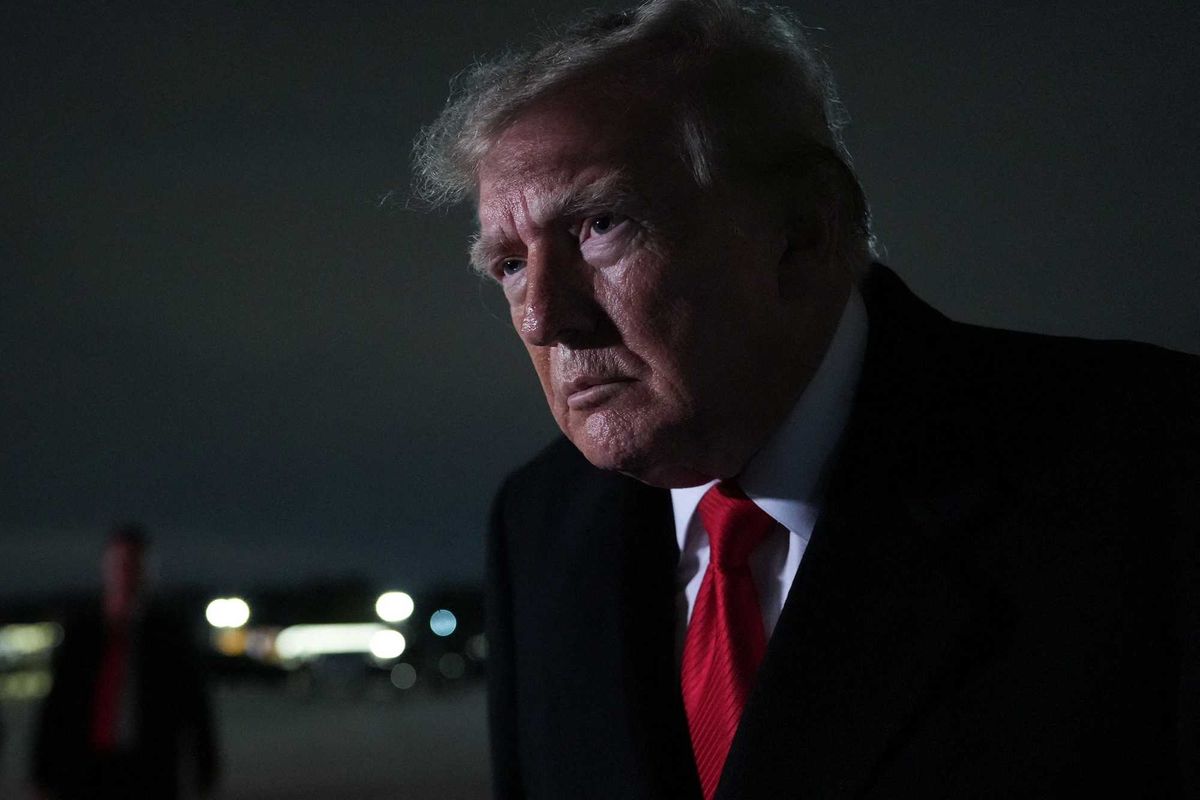
President Donald Trump was ridiculed en masse Sunday after the purported ceasefire he claimed had been brokered between Russia and Ukraine fell apart within hours.“What can you even say,” wrote investigative journalist and writer Ilya Lozovsky in a social media post on X.Sunday morning, Trump took to social media to claim that an agreement had been reached between Russia and Ukraine to halt attacks on energy infrastructure.“Effective immediately, there is an ENERGY CEASEFIRE in the War between Russia and Ukraine,” he wrote. “Both parties have agreed. Do not break it!”Moments later, Ukrainian President Volodymyr Zelenskyy said of the purported agreement, “the ceasefire was news to me,” but said he would agree to halt attacks on Russian energy targets if Moscow followed suit.Hours later, Zelenskyy said that Russian strikes on Ukrainian energy sites had continued despite Trump’s claim.“There were strikes, unfortunately, with aerial bombs,” Zelenskyy said during his nightly video address, according to Reuters. “There were strikes on our energy infrastructure. Just now, there was a strike on the joint power and heating plant in the city of Kharkiv — hitting Kharkiv’s energy system.”Former Republican congressman Adam Kinzinger sarcastically expressed shock that Trump’s purported agreement had proven to be false.“What??? Trump lied???” Kinzinger wrote.And Anne Applebaum, Pulitzer Prize-winning historian and journalist, issued Trump an especially harsh condemnation.“Trump announces an energy ceasefire. Ukrainians learn about it from social media. Immediately, there are more Russian strikes on Ukrainian energy infrastructure,” Applebaum wrote. “The president lives in a fantasy world of his own construction.”Trump announces an energy ceasefire. Ukrainians learn about it from social media. Immediately, there are more Russian strikes on Ukrainian energy infrastructure.The president lives in a fantasy world of his own construction— Anne Applebaum (@anneapplebaum) October 11, 2026
'October surprise' wallops Trump admin as 'disaster' engulfs Middle East: expert
Oct 11, 2026 - World
With the midterms just weeks away, a cascade of attacks across the Middle East has left the Trump administration facing what one geopolitical expert called “only the BEGINNING of the October Surprise,” one that was predicted by another expert months prior.Yemen’s Houthi militants carried out a deadly attack on Saudi Arabia’s capital Saturday, the third such attack in recent weeks. The Houthis have also strengthened their hold on the Bab al-Mandab Strait, a critical global shipping chokepoint, much like the Strait of Hormuz, where strikes have intensified over the past several days, Al Jazeera reported Sunday.Vessels have also been struck outside the Strait of Hormuz in recent days, such as a tanker struck in the Gulf of Oman, according to British Navy agency UKMTO data reviewed by Reuters, and Iraqi militias have been discovered to be coordinating with Iran to threaten its Gulf state neighbors.“We are witnessing only the BEGINNING of the October Surprise. Vessels are being hit constantly by Iran. And not just ‘little hits.’ The radius of the strike area has expanded into the Gulf of Oman and Persian Gulf,” wrote geopolitical expert Brett Erickson Sunday in a statement published on social media.“Ansar Allah (Houthis) are striking airports and energy infrastructure across Saudi [Arabia]. Iraqi militias are ready to join the fight. This is a disaster that a TODDLER could have predicted.”The “October Surprise” Erickson described was predicted back in August by foreign policy expert Trita Parsi, who warned at the time that President Donald Trump’s apparent strategy to “push the [Iran] conflict out of the minds of voters” would likely backfire.“If Washington wants to keep things quiet until the midterms, Tehran may conclude that the optimal moment to strike back is two or three weeks before the Congressional elections, maximizing the political damage to Trump,” Parsi warned in August.Parsi doubled down on his prediction in early September, warning that “all signs” were pointing to a “major escalation” from Iran sometime in October, just weeks away from the U.S. midterms.We are witnessing only the BEGINNING of the October Surprise.Vessels are being hit constantly by Iran. And not just “little hits”. The radius of the strike area has expanded into the Gulf of Oman and Persian Gulf.Ansar Allah (Houthis) are striking airports and energy infrastructure across Saudi.Iraqi militias are ready to join the fight.This is a disaster that a TODDLER could have predicted.— Brett Erickson (@BrettErickson28) October 11, 2026

Oct 14, 2026 - World 
Oct 14, 2026 - World
Oct 14, 2026 - World
Oct 14, 2026 - World
Oct 14, 2026 - World
Oct 14, 2026 - World
Oct 14, 2026 - World
Oct 14, 2026 - World
Oct 14, 2026 - World
Oct 14, 2026 - World